소리를 따라 칸이 채워집니다
오른쪽 줄의 맨 위 칸에서 시작해, 아래로 내려간 뒤 왼쪽 줄로 넘어갑니다. 금색 칸이 지금 울리는 소리입니다.
Start at the top of the right-hand column, read downward, then move to the next column on the left. The gold square is the sound you hear now.
이해를 돕기 위한 예시 선율입니다. · An illustrative melody to show how Jeongganbo is read.
정간보 읽는 법
칸의 개수가 곧 시간의 길이입니다. 소리가 길면 여러 칸을 차지합니다.
One square is one beat. A longer sound fills more squares.
한 줄을 위에서 아래로 읽고, 다음 줄은 왼쪽으로 넘어갑니다. 옛 책을 읽는 순서와 같습니다.
Read each column from top to bottom, then move left, the same order as a traditional Korean book.
칸 안의 한자(율명)가 음의 높이를 나타내고, 줄표(-)는 앞의 소리를 이어 냅니다.
The character in each square names the pitch; a dash (-) holds the previous sound.
이 예시에 쓰인 율명 · Pitch names in this example
서양음 표기는 정악 기준의 대략적인 높이입니다. · Western pitches are approximate, as commonly used for court music.
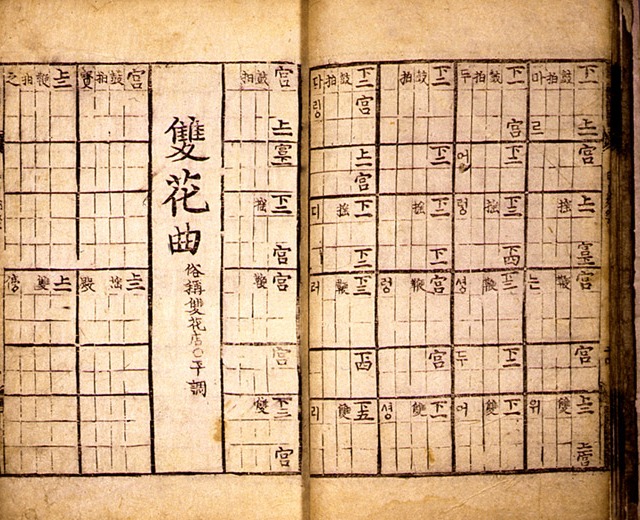
Ssanghwagok in the Siyong Hyangakbo, an early Joseon Jeongganbo score. Public domain, via Wikimedia Commons.
600년 가까이 이어진 악보
정간보는 세종 때 만들어져 『세종실록』 악보에 실려 전합니다. 음의 높이와 길이를 함께 적을 수 있는 동양 최초의 악보로 알려져 있으며, 오늘날 국악 연주자들도 이 악보로 음악을 배우고 연주합니다.
왼쪽은 조선 전기의 악보집 『시용향악보』에 실린 쌍화곡입니다. 흔히 「쌍화점」이라 불리던 노래로, 세로로 길게 이어진 칸 속에 음과 장단이 한 칸 한 칸 적혀 있습니다. 위에서 소개한 읽는 법 그대로, 오른쪽 위에서 시작해 아래로 읽어 내려갑니다.
Created in King Sejong's reign and preserved in the musical scores of the Annals of King Sejong, Jeongganbo is known as the first notation in East Asia to record both pitch and duration. Korean traditional musicians still learn and perform from it today.
Shown here is Ssanghwagok, also known as Ssanghwajeom, from the Siyong Hyangakbo, a songbook of the early Joseon period. Pitch and rhythm are written square by square in long vertical columns, read from the top right, just as described above.
세종의 악보로 만든 상장
KYHS 음악콩쿨 국악 부문 상장에는 정간보(井間譜)가 담겨 있습니다. 위에서 아래로, 오른쪽에서 왼쪽으로 칸을 따라 읽으며 흘러가는 소리의 시간을 눈으로 볼 수 있게 한 이 악보처럼, 수상자의 이름 곁에 놓인 칸들은 600년 가까이 이어진 우리 음악의 지혜와 오늘 무대에 선 연주자의 시간이 하나로 이어져 있음을 뜻합니다.
Certificates for the KYHS Music Competition Gugak Division carry the design of Jeongganbo. Placed beside each winner's name, these squares join nearly six centuries of Korean musical wisdom with the time each young musician has given to their art.